

The Core Breakdown: Flatbeds vs. Intermodal Containers
Many shippers default to standard intermodal containers because they represent the baseline of global transit. But industrial freight rarely fits neatly into standard boxes.
Choosing between a specialized flatbed trailer and a standard Less-than-Container Load (LCL) or Full Container Load (FCL) intermodal shipping container requires balancing geometry, weight distribution, and terminal logistics.
| Features & Logistics | Specialized Flatbeds | Standard Intermodal (FCL/LCL) |
| Loading Style | Open crane overhead access; side-loading for awkward lengths. | Rear door access only; requires forklifts or manual ramp loading. |
| Dimensional Limits | Accommodates over-dimensional, wide, or tall cargo with permits. | Must fit strictly within a rigid 20ft or 40ft enclosed steel box. |
| Max Legal Payload | Up to ~48,000 lbs on standard air-ride flatbeds (more with extra axles). | Up to ~44,000 lbs inside a container to remain legally compliant on roads. |
| Securitization | Heavy-duty chains, binders, over-center straps, and coil racks. | Internal dunnage, blocking, bracing, and nylon tie-down straps. |
When to Choose a Flatbed
If your industrial freight features structural elements that cannot be easily tilted, broken down, or loaded from a standard ground ramp, flatbeds are your operational baseline. They are essential for non-divisible manufacturing machinery, long structural beams, and any freight requiring overhead crane loading at a fabrication facility.
When to Choose Intermodal
If your heavy materials are already uniform, heavily palletized, or securely crated—and they comfortably slide under the 8’6″ width and 8’10” interior height limits of a standard container—intermodal transport provides excellent protection from weather elements and seamless terminal transitions.
The Houston Oil & Industrial Factor
The Port of Houston handles massive industrial volumes, moving millions of short tons of steel and heavy machinery annually to support the energy and chemical manufacturing sectors along the Houston Ship Channel.
With multi-billion dollar capital investments expanding port berths like Wharf 7 at Bayport, the regional infrastructure is built for scale—but your specific local route will determine your real-world costs.
       [ Port of Houston Terminal ]
                     │
         Is the cargo divisible?
          ├── YES ──> [ Intermodal Container ] ──> Fast Port Turn Times
          └── NO  ──> [ Specialized Flatbed ]  ──> Requires TxDMV Route Review
Moving raw industrial components through Southeast Texas introduces unique regional factors:
-
The Weight Matrix: Heavy oilfield manifolds, drill pipe strings, and raw steel coils quickly push a truck toward the Texas legal Gross Vehicle Weight (GVW) limit of 80,000 pounds.
-
The Routing Headache: Southeast Texas infrastructure features specialized challenges—from low-clearance older overpasses near historic industrial zones to strict weight limits across bayou bridge networks.
-
The Permit Bottleneck: If your cargo pushes your flatbed setup past standard legal dimensions, you immediately enter Texas Permitting & Routing Optimization System (TxPROS) territory. Failing to secure single-trip or annual envelope permits before a truck rolls onto local highways can result in thousands of dollars in structural civil penalties.
Safety and Compliance: The Non-Negotiable Standard
When a truck is carrying 45,000 pounds of raw structural steel or a massive industrial turbine, there is absolutely zero margin for error. Securement failures aren’t just logistical errors; they are catastrophic safety hazards.
Because we operate our own assets directly next to the port action, Seashore Transportation builds rigorous safety and compliance directly into every single dispatch.
The Physics of Steel: Securing steel coils or heavy machinery requires specialized mathematical calculations. It demands precise weight distribution across the trailer’s tandem axles to avoid overloading, alongside high-tensile chains that meet exact Federal Motor Carrier Safety Administration (FMCSA) working load limits.
The Seashore Guarantee:
-
Rigorous Driver Training: Our drivers are specialized heavy-haul experts who undergo regular, intensive training on FMCSA cargo securement regulations, specialized tarping, and heavy load balance.
-
Total Asset Control: We don’t hand your high-value industrial freight off to unverified, unvetted third-party spot-market carriers. We run our own fleet, which means we inspect every strap, chain, binder, and chassis ourselves.
-
Proactive Regulatory Compliance: We manage the entire Texas oversize/overweight permitting process in-house, ensuring that if your industrial freight requires specialized routing, it travels on pre-cleared, completely legal highway lanes.
Secure Your Industrial Movement
Whether your upcoming project requires standard intermodal container drayage out of Barbours Cut or a highly coordinated, heavy-duty flatbed setup to move industrial machinery through the heart of the Gulf Coast energy corridor, Seashore Transportation has the local footprint and asset backing to execute it seamlessly.
Let’s discuss the dimensions of your next shipment and build a completely compliant, highly secure transport plan.
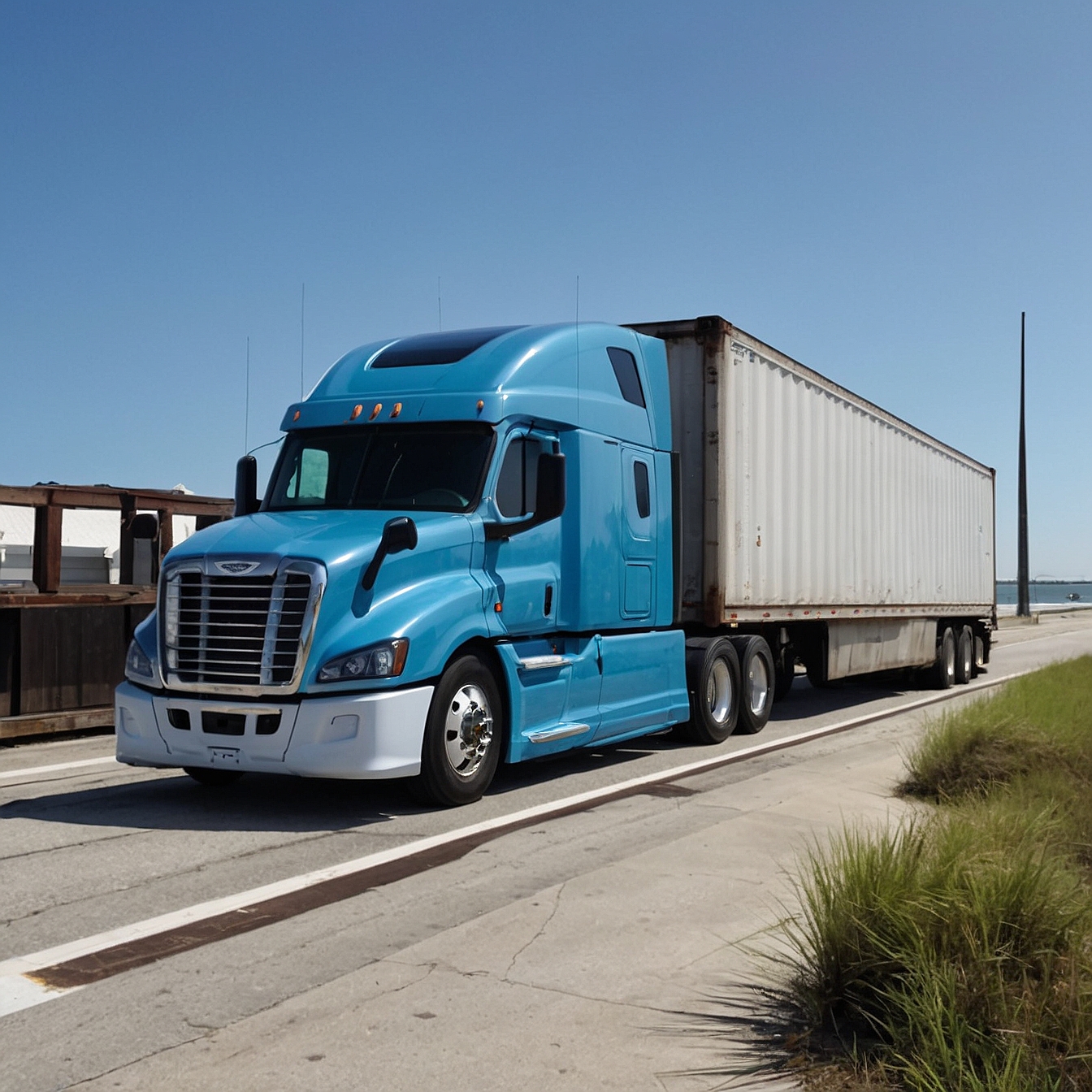
Seashore transportation is a transportation staple in La Porte Texas.