
The Texas Triangle Express: Optimizing Freight Routes Between Houston, Dallas, and San Antonio
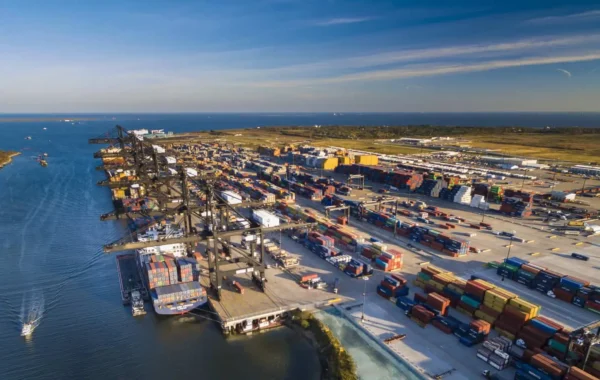
Containing over 70% of the state’s population and serving as the economic engine of the Southwest, the Texas Triangle—anchored by Houston, Dallas-Fort Worth, and San Antonio/Austin—is one of the most vital freight arenas in North America. Millions of tons of ocean import cargo move through Port Houston every year, destined for retail shelves, construction sites, and manufacturing plants scattered across this massive megaregion.
For supply chain managers, moving freight across the Triangle sounds straightforward on a map. In reality, conquering the 800+ miles of highway connecting I-10, I-45, and the heavily congested I-35 corridor requires strategic route planning, precise timing, and dedicated local staging.
Here is how local staging near Port Houston unlocks hyper-efficient regional distribution, along with actionable strategies to keep your freight moving smoothly across the Texas Triangle.
1. The Staging Advantage: Why Location Near Port Houston Matters
The traditional long-haul model often forces drivers to pull a container directly from the port terminal and attempt a single, uninterrupted drive straight to Dallas or San Antonio. When port gate queues drag on or highway traffic stalls, that strategy falls apart—wasting driver Hours of Service (HOS) log time and running up expensive port storage fees.
By utilizing a dedicated staging yard near Port Houston (specifically in strategic hubs like La Porte), logistics operators decouple the port drayage leg from the regional highway leg:
Pre-Drop Efficiency: Import containers are extracted from Barbours Cut or Bayport terminals the instant they are cleared, eliminating the threat of port demurrage charges.
Night Staging & Pre-Tripping: Containers are pre-staged, inspected, and paired with dedicated chassis in a local yard overnight.
Seamless Relay: Drivers assigned to regional lanes (Houston to DFW or Houston to San Antonio) hook up to pre-inspected, ready-to-roll loads at 5:00 AM—bypassing port line-ups entirely and hitting the highway before morning rush-hour traffic hits.
2. Navigating the Big Three Corridors
Optimizing supply chain routes across the Texas Triangle requires an active strategy for each primary arterial:
I-45 (Houston to Dallas-Fort Worth)
The Challenge: High freight volume combined with heavy commuter congestion exiting Greater Houston (Spring/Conroe) and entering South Dallas.
The Strategy: Schedule northbound dispatch out of Houston staging yards between 3:30 AM and 5:00 AM. This allows drivers to clear Montgomery County before the morning commute and hit the DFW metroplex before afternoon traffic peaks, enabling same-day turnarounds for regional drivers.
I-10 (Houston to San Antonio)
The Challenge: While generally smoother than I-45, severe bottlenecks often form around the East Houston industrial loop and urban stretches near Katy.
The Strategy: Utilize staging locations east of Houston (such as La Porte) that allow easy access to outer beltways like SH-99 (Grand Parkway) or Toll 249 to bypass inner-city bottlenecks, giving drivers a clean, open run west toward San Antonio.
I-35 (San Antonio to DFW / Austin Transit)
The Challenge: Major ongoing infrastructure projects (like the multi-billion-dollar I-35 NEX expansion in San Antonio) and heavy cross-border freight traffic make the I-35 corridor one of the most bottleneck-prone stretches of highway in the country.
The Strategy: Avoid routing cross-Triangle freight straight up I-35 during peak daytime hours. When moving cargo between San Antonio and Dallas, utilize off-peak evening transit or consider alternate regional loops (such as US-77 or US-281) to bypass Austin metro delays.
3. Actionable Checklist for Supply Chain Managers
If you are shipping containerized freight throughout the Texas Triangle, implement these operational practices to trim freight spend and boost delivery reliability:
Implement a Hub-and-Spoke Drayage Model: Don’t pay long-haul rates for port delays. Separate your port drayage (short-haul) from your highway line-haul (regional delivery).
Leverage Drop-and-Hook Operations: Minimize driver dwell time at destination facilities by setting up drop-and-hook agreements in Dallas or San Antonio, allowing line-haul drivers to immediately pull an empty container back to Houston.
Build Buffer Days Around Port Free Time: Even with great planning, terminal congestion happens. Partner with a carrier that offers local yard storage near the port so your cargo can be pulled out of the terminal before free time expires, even if your regional receiver isn’t ready for delivery yet.
Require TWIC & Real-Time Tracking Integration: Ensure your drayage carrier utilizes automated GPS container tracking and maintains a 100% TWIC-compliant driver fleet to prevent terminal turn-aways.
Powering Your Texas Triangle Freight
Mastering distribution across Texas requires more than just trucks; it takes an operational launchpad positioned right at the gateway of trade.
At Seashore Transportation, our strategically located operations in La Porte give your freight an immediate head start. Whether you need fast container drayage out of Port Houston, secure yard staging, or reliable regional transportation across the Texas Triangle, our team delivers the agility, safety, and local expertise your supply chain demands.
Looking to streamline your Texas distribution routes? Contact Seashore Transportation today to discuss custom freight and drayage solutions for your business.

Seashore transportation is a transportation staple in La Porte Texas.